
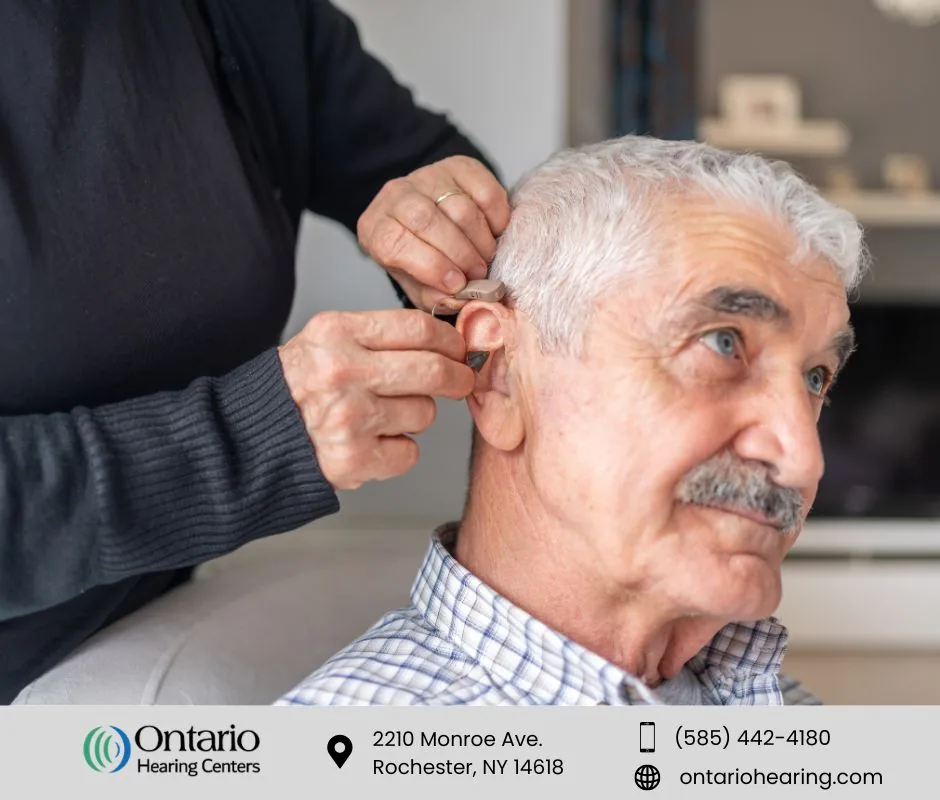
A hearing aid clinic is a hearing care office that provides hearing tests, hearing aid recommendations, fittings, adjustments, repairs, and ongoing support for individuals noticing hearing changes.
Instead of guessing or buying a device blindly, you get clear testing, a plan that matches your listening needs, and follow-up fine-tuning as your hearing and comfort needs change over time.
Ontario Hearing Center offers hearing evaluations, hearing aid consultations, and hearing aids in Rochester, NY, and nearby communities.
A hearing aid clinic, also called a hearing clinic or hearing center, is a place where patients can get help with hearing concerns, hearing tests, hearing aid recommendations, fittings, adjustments, repairs, and ongoing care. Some people visit a hearing aid clinic because they already know they need hearing aids or other hearing devices.
Others come in because conversations sound muffled, family members keep saying the TV is too loud, or noisy rooms have become harder to follow. A good clinic can support a wide range of needs across different types of hearing changes and different levels of severity, from early concerns to more advanced hearing loss.
The goal of a good hearing aid clinic is not just to sell a device. The goal is to understand what is happening with your hearing, protect your hearing health, and help you choose a practical solution for better communication. That includes giving clear information, explaining your results, and helping you make better decisions based on your lifestyle, budget, and listening experience.
What Does a Hearing Aid Clinic Do?
A hearing aid clinic helps identify hearing problems and match people with appropriate hearing solutions. That may include prescription hearing aids, hearing aid adjustments, hearing protection, earwax guidance, assistive listening devices, tinnitus support, or a referral to a medical provider when symptoms suggest something outside routine hearing care. While a hearing aid clinic may not replace a medical diagnosis from a physician, it can help clarify what your hearing test shows and whether additional evaluation is needed.
Common services include:
• Comprehensive hearing evaluations and hearing assessments
• Hearing aid consultations
• Hearing aid fittings
• Programming and fine-tuning
• Real-ear verification when available
• Hearing aid cleanings and maintenance
• Troubleshooting for weak sound, feedback, or poor comfort
• Follow-up care as hearing needs change
• Tinnitus management and counseling (when appropriate)
• Guidance on hearing protection for work and hobbies, including noisy activities
A clinic may also help explain the difference between hearing aids, over-the-counter devices, amplifiers, and other listening technology. Many patients appreciate seeing the full picture: what the device does, what the microphone technology or amplification system is doing, and which features matter for their listening environments.
Who Works at a Hearing Aid Clinic?
Many hearing aid clinics are staffed by audiologists, hearing instrument specialists, or both. An audiologist has doctoral-level training in hearing and balance care (often a Doctor of Audiology) and is trained to evaluate hearing, interpret results, and guide treatment and rehabilitation plans.
A hearing instrument specialist is trained to test hearing for the purpose of fitting hearing aids and supporting hearing aid users.
The exact provider you see may depend on the clinic, the staff, and the services you need. If your symptoms include sudden hearing loss, ear pain, drainage, dizziness, or one-sided changes, the clinic may recommend a medical evaluation. In some cases, that means a referral to a physician outside the clinic, depending on the suspected condition.
For people curious about audiology as a field or career path: audiologists typically complete significant education and clinical training, and many enter the profession after earning a bachelor’s degree and completing doctoral-level preparation. Students in audiology programs build hands-on skills through supervised clinical placements before practicing independently.
When Should You Schedule a Visit?
You do not have to wait until hearing loss feels severe. A hearing aid clinic can help when you notice early changes, even if you are not sure whether hearing aids are needed. Early testing can provide valuable baseline information that helps track changes over time and supports better decisions later.
Consider scheduling a visit if:
• People seem to mumble
• You ask others to repeat themselves often
• You hear but do not always understand speech
• Background noise makes conversation difficult
• You turn the TV or phone volume higher than others prefer
• You avoid restaurants, meetings, or group settings because listening feels tiring
• You have ringing, buzzing, or other sounds in your ears (tinnitus)
• Your current hearing aids are uncomfortable or unclear
• You have not had your hearing checked in several years
A hearing test can give you a clear baseline, even if you are not ready for hearing aids. It can also help identify possible contributing causes, including hearing-related disorders that may need medical follow-up.
Ontario Hearing Center provides comprehensive hearing tests in Rochester, NY.
What Happens at the First Appointment?
Your first visit usually starts with a conversation and a listening-focused consultation. The provider may ask about your hearing concerns, health history, noise exposure, tinnitus, communication goals, and the situations where you struggle most. This is where your lifestyle, work demands, and day-to-day activities matter because the right hearing plan is not the same for everyone.
Next, the provider may look in your ears to check for visible earwax or other concerns. If testing is appropriate, you will complete a hearing evaluation in a quiet test environment. The results show which sounds you hear well, which sounds are harder to hear, and how clearly you understand speech. These assessments help the provider understand not just whether you have hearing loss, but what kind, how severe, and what that means for real-world listening.
After the test, the provider explains your results in plain language. If hearing aids may help, you can discuss style, technology level, comfort, budget, phone compatibility, rechargeable options, and follow-up care. The visit may also include a demonstration of hearing aid features so you can better understand how different options may support speech clarity and listening comfort. The goal is to give you enough detail to choose an option confidently without overwhelming you with jargon.
If you have insurance, the clinic may also help you understand your coverage, billing process, and what documentation is needed. That support can improve access and reduce confusion, especially for first-time patients.
Do Hearing Aid Clinics Only Sell Hearing Aids?
No. A good clinic should also help you understand whether hearing aids are the right next step. Sometimes the first step is earwax management, hearing monitoring, communication strategies, medical referral, tinnitus management, or a different type of hearing support.
If hearing aids are recommended, the clinic should explain why and show how the recommendation connects to your test results and everyday listening needs. That explanation matters for patient rights and informed decision-making: you should understand the basis of the recommendation and what you’re paying for.
What Is a Hearing Aid Fitting?
A hearing aid fitting is the appointment where the devices are programmed and adjusted for your hearing. This is different from simply placing a device in your ear. A fitting is part of a larger care plan that often includes counseling, real-ear verification, a demonstration of basic device use, and follow-up care.
During a fitting, the provider may:
• Program the hearing aids based on your hearing test
• Check the physical fit
• Teach you how to insert and remove the devices
• Show you how to clean them
• Explain batteries or charging
• Pair the devices with your phone if needed
• Review realistic expectations
• Schedule follow-up adjustments
• Review core device features, including microphones and sound-processing settings
Many people need a few adjustments after wearing hearing aids in real life. That is normal. Follow-ups allow customization based on your real-world experience, which is one of the biggest differences between a clinic-based plan and a one-time device purchase.
Why Follow-Up Care Matters
Hearing aids work best when they are fine-tuned over time. Your brain needs time to adjust to sounds you may not have heard clearly for years. Everyday environments also reveal things that cannot always be predicted during the first fitting.
Follow-up visits can help with:
• Speech clarity
• Background noise
• Feedback or whistling
• Comfort
• Bluetooth connection issues
• Cleaning and wax filter changes
• Volume preferences
• Changes in hearing
This ongoing support is one of the biggest differences between a full-service hearing aid clinic and a one-time device purchase. It also improves long-term outcomes, satisfaction, and quality of life because the plan can change as your hearing changes.
Questions to Ask a Hearing Aid Clinic
Before choosing a clinic, ask questions that help you understand the care process. Good questions include:
• Will I receive a full hearing assessment?
• Who will explain my results?
• Which hearing aid brands or styles do you work with?
• How are hearing aids programmed and verified?
• What follow-up visits are included?
• What happens if the hearing aids need repairs?
• Can you help with cleaning and maintenance?
• What is included in the total cost?
• How long is the trial or adjustment period?
• Do you offer tinnitus management or other treatment options?
• Do you work with my insurance, and what are the details of coverage?
The answers should feel clear and practical, not rushed or confusing. If a clinic cannot explain its approach, its pricing, or what is included, that is a sign to keep looking.
Where to Start With Hearing Care in Rochester, NY
A hearing aid clinic is more than a place to buy hearing aids. It is where you can learn what is happening with your hearing, get professional testing, compare options, and receive support after the fitting. This education-first approach is what helps individuals move from uncertainty to a workable plan focused on better communication and quality hearing care.
Ontario Hearing Center is more than just a hearing aid clinic in Rochester, NY. We provide comprehensive hearing care from expert audiologists in New York.
If you are noticing hearing changes or wondering whether hearing aids could help, our team can evaluate your hearing, explain your options, and guide you through the next step with care that fits your needs.
Contact us today to schedule an appointment!