
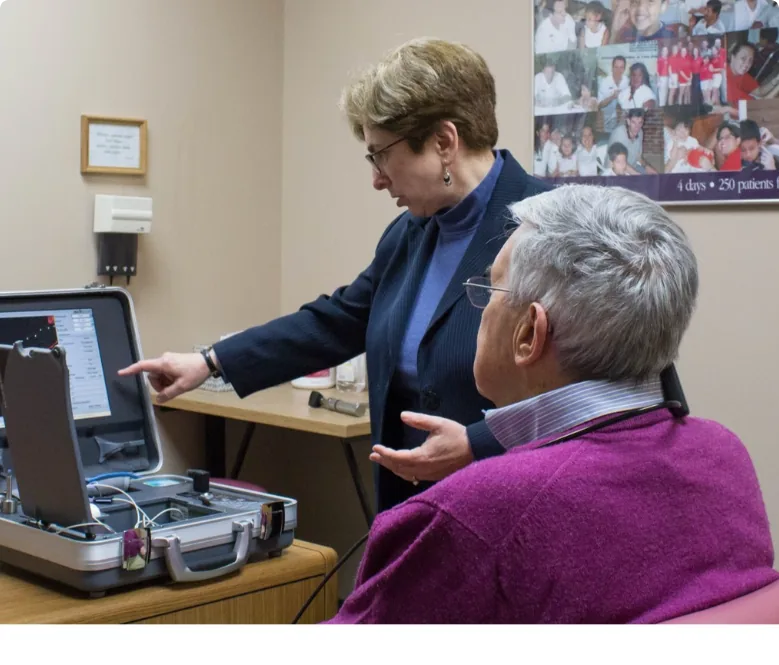
Ontario Hearing Center has audiologists providing hearing tests in Rochester, NY.
Hearing health is a critical component of your overall well-being. Because hearing loss often develops gradually(due to factors like age-related changes or prolonged noise exposure), it can be difficult to detect until it begins to impact your social interactions and quality of life.
Our team provides professional guidance to help you understand your hearing profile and take proactive steps toward hearing preservation and clarity.
Expert Tip: Early intervention is the most effective way to manage auditory health. Seeking professional advice from an audiologist at the first sign of difficulty can prevent the cognitive strain often associated with untreated hearing loss.
Hearing Tests in Rochester, NY
Getting a hearing test is the first step towards better hearing. Ontario Hearing Center offers comprehensive hearing tests in Rochester, NY.
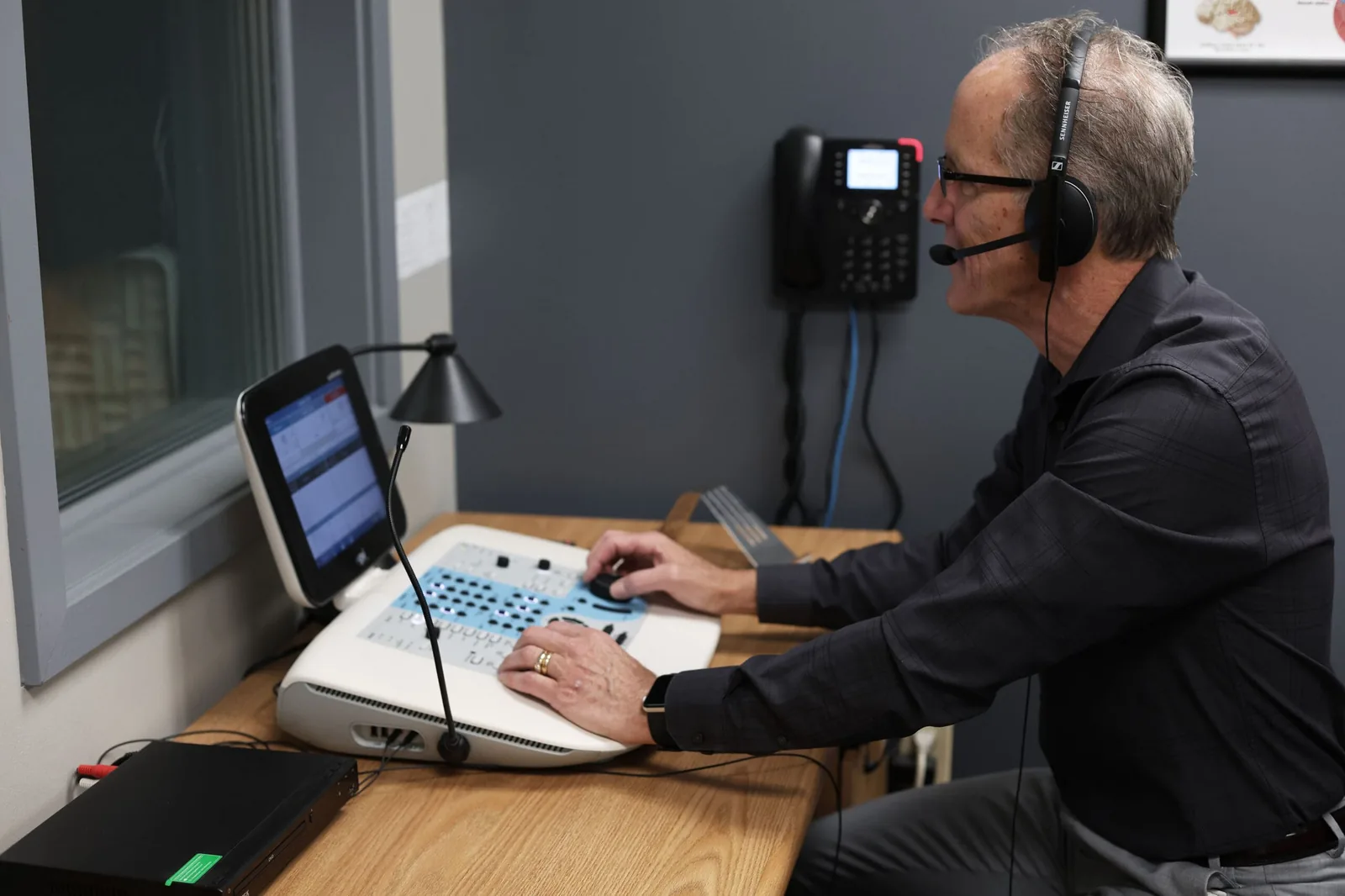
A hearing test at Ontario Hearing Centers is a painless 45 to 60 minute appointment with a licensed audiologist who checks how well you hear across speech and tone frequencies, then explains exactly what the results mean for your daily life. We test adults and children at our Rochester-area offices, and every evaluation is read and discussed with you the same day.
Which hearing tests we perform
Our audiologists run a full diagnostic battery, not a quick screening. That includes pure-tone audiometry to map the softest sounds you can hear at each pitch, speech audiometry to measure how clearly you understand words at conversational volume and in background noise, and tympanometry to check how your eardrum and middle ear are moving. Bone-conduction testing tells us whether a loss sits in the outer or middle ear or in the inner ear and hearing nerve, which changes the treatment path entirely. If you already wear hearing aids, we also verify them with real ear measurement so the fit matches your actual prescription.
What happens at your appointment, step by step
You'll start with a short conversation about your hearing history, noise exposure, medications, and the specific situations where you're struggling. Then the audiologist looks in your ears with an otoscope. Testing happens in a sound-treated booth: you'll press a button or raise a hand when you hear a tone, then repeat words back. It's quiet, calm work, and nothing about it is uncomfortable. Our what to expect page walks through the visit in more detail.
Who should book a hearing evaluation
Book a test if you turn the TV up more than others in your house, ask people to repeat themselves in restaurants, hear ringing or buzzing, or notice voices sounding muffled. Adults over 50 benefit from a baseline test even without symptoms, since hearing loss usually arrives gradually enough that family notices before you do. Anyone with sudden hearing change in one ear should be seen promptly.
Insurance and what to bring
Bring your insurance card, photo ID, a list of current medications, and a family member or friend if you can. A second set of ears helps during the results conversation. Many plans cover diagnostic hearing evaluations, and coverage for hearing aids themselves is separate and varies by plan. See our insurance page, or call before your visit and we'll check your benefits.
How results are explained and what comes next
You get your results the same visit, in plain language. Your audiologist walks you through your audiogram, shows where your hearing sits against the range of normal speech sounds, and explains what you're missing in real conversations. If hearing is normal, you leave with a baseline for future comparison. If there's a loss, we discuss options, which might mean hearing aids, medical referral, tinnitus management, or a follow-up test in a year. Nobody is pressured into a purchase on test day.
Hearing Test Results
If you have any issues with your hearing, a hearing test, also known as an audiogram, is the most essential step to take. The audiogram is the standard way to measure your hearing. It shows how soft sounds are at different pitches or frequencies. This test can help find out if you have a hearing loss and what type of hearing loss it might be.
If you suspect that you may have a problem with their hearing, consider bringing them to an audiologist to be assessed properly.
Sound travels at different rates depending on the type of noise that is being emitted. The measurement of sound waves, known as decibels (dB), can determine how loud or soft a sound is.
A common guideline for people with normal hearing ability is to be able to hear sounds between 0 and 25 dB across the frequency spectrum. Children will have a normal hearing ability if their responses indicate they are able to hear noises from 0 to 15 dB across the frequency range.
Traditional vs Online Hearing Test
You might think that getting an online hearing test is easier, less invasive than other tests, and cheaper- but what if there’s a serious hearing health issue? What if the results are incorrect? What if it’s not a hearing problem but a serious medical condition?
It would be best if you get an actual hearing test at an audiology clinic so that a licensed audiologist can interpret the results for you rather than take an online hearing test by yourself.
Frequently Asked Questions
What happens during a hearing test?
A typical hearing test takes around 20-30 minutes and is a noninvasive process.
During a hearing test, you’ll be asked to wear earphones or foam inserts and listen to short tones or audio prompts that are played at different pitches and volumes. You may be asked to repeat words or sentences in quiet and/or noisy competition.
The hearing test is done in a sound treated room and is the most effective way to obtain accurate information regarding the type and degree of your hearing acuity.
Why would I need a hearing test?
Studies show that adults routinely have their eyes examined but do not regularly check their hearing.
Hearing tests are painless and non-invasive. They can identify how well you hear the volume and what pitches you can or can’t hear.
It is recommended that adults 50 years old or older should have a hearing test to establish a a baseline. If the test shows no significant hearing loss then the audiologist can compare the results to future tests to determine if hearing is changing.
Studies have also shown a strong correlation between untreated hearing loss and dementia or cognitive decline. The earlier a hearing loss is treated, the better the results-both communicative and brain function wise.
What happens after a hearing test?
If a hearing loss is noted,a specific treatment plan based on your individual hearing loss and communication needs will be offered.
The recommendation and treatment plan will involve a conversation about different styles of hearing aids and the technology options available.
Our philosophy is to educate patients about their options, and not pressure them to make immediate decisions.
Where is a hearing test performed?
All our hearing tests are performed by licensed Doctors of Audiology in sound treated booths so consistent and accurate results can be obtained.
How long does a hearing test take?
Plan 45 to 60 minutes for a full diagnostic evaluation, including the intake conversation and the results discussion. A basic screening takes less, but we test thoroughly because the detail is what makes the treatment plan right.
Does a hearing test hurt?
No. Nothing enters your ear canal beyond a soft foam tip or a probe that rests just inside. Tympanometry uses a brief puff of air pressure that feels like the sensation of changing altitude, and it's over in seconds. Children handle these tests routinely.
Do I need a referral from my doctor?
No referral is needed to book with us. Some insurance plans require one for coverage, so it's worth a quick call to your plan first. We'll help you figure out what your policy asks for.
How often should I have my hearing tested?
Every one to two years for adults over 60, annually if you already have a diagnosed loss or wear hearing aids, and yearly if you work around loud equipment. Any sudden change deserves a test right away rather than waiting for a scheduled one.
What if the test shows I need hearing aids?
You choose the pace. We explain the degree and type of loss, show which technology levels address it, and give you time to decide. Fittings are a separate appointment, and we verify every fitting with real ear measurement.