
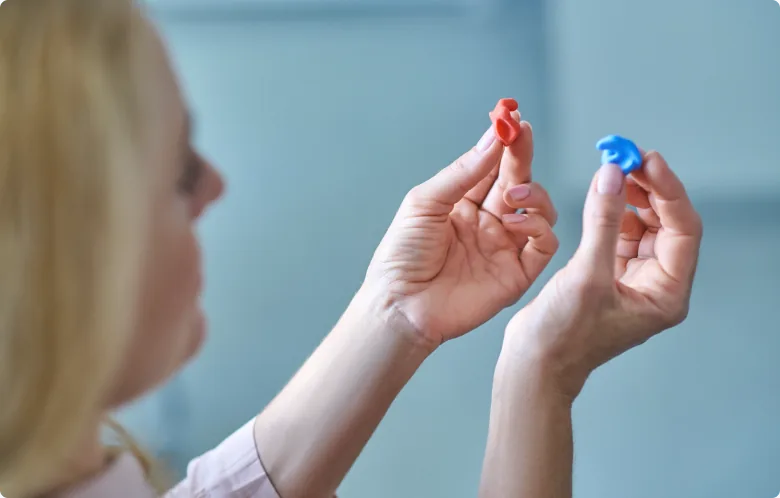
A hearing aid fitting in Rochester, NY is the appointment where your audiologist programs your hearing aids to your own hearing test results, then measures what the devices actually deliver inside your ears with real ear measurement. Our experienced audiologists take the time to understand your hearing challenges, lifestyle, and personal preferences to recommend the best hearing aids for you.
During the fitting process, we’ll carefully adjust your hearing aids to ensure they deliver the best possible sound quality and comfort. We’ll also teach you how to use and care for your new devices so you can confidently enjoy better hearing every day. Our goal is to help you rediscover the joy of hearing with hearing aids that fit seamlessly into your life.
TL;DR: Hearing aid fittings in Rochester, NY
- A fitting is a separate appointment from your hearing test. You'll usually leave wearing the devices.
- Your audiologist programs each device to your audiogram, then verifies the output with real ear measurement rather than manufacturer defaults.
- Follow-up visits fine-tune the settings as your brain adjusts to hearing those sounds again.
- Ontario Hearing Center fits Oticon, Phonak, ReSound, Starkey, Widex, Unitron and Lyric devices.
- Bring someone who talks with you regularly — a familiar voice helps when we check the settings.
What happens during a hearing aid fitting?
During a hearing aid fitting, several important steps take place to ensure that your hearing aids are perfectly suited to your needs. Here’s what typically happens:
1. Review of hearing test results
The audiologist will start by going over your recent hearing test results. This helps them understand the specific sounds and frequencies you have trouble hearing.
2. Selecting the right hearing aids
Based on your hearing test and your lifestyle needs, the audiologist will recommend hearing aids that are best suited for you. They’ll consider factors like the severity of your hearing loss, your daily activities, and your preferences for style and features.
3. Customization
The audiologist will make sure the hearing aids fit comfortably in your ears. If you have custom-molded hearing aids, they’ll check the fit to ensure there’s no discomfort.
4. Programming
Using specialized software, the audiologist will program the hearing aids to match your hearing loss profile. They’ll adjust the settings so that sounds are amplified in a way that helps you hear more clearly.
5. Real-Ear Measurements
To ensure accuracy, the audiologist might perform real-ear measurements. This involves placing a small microphone in your ear canal to measure how the hearing aids are amplifying sound. Adjustments can then be made to fine-tune the hearing aids.
6. Instruction and practice
The audiologist will show you how to use your new hearing aids, including how to put them on, adjust the volume, change batteries, and clean them. They’ll also answer any questions you have about taking care of your devices.
7. Follow-Up appointments
Finally, the audiologist will set up follow-up appointments to check how you’re adjusting to the hearing aids and make any necessary adjustments. This ensures that your hearing aids continue to work well for you.
The goal of the fitting process is to make sure your hearing aids are comfortable, effective, and easy to use so you can enjoy improved hearing in all areas of your life.
Hearing Aids in Rochester, NY
Ontario Hearing Center carries a wide selection of hearing aids in Rochester, NY. We work with the top hearing aid brands to ensure that you have access to the best hearing solutions.
Here are the hearing aid brands available at Ontario Hearing Center:
Real Ear Measurement
Real-ear measurement (REM) is an important step when getting your hearing aids fitted. It makes sure your hearing aids are just right for you. During REM, a tiny microphone is placed inside your ear to check how well the hearing aids are making sounds louder. This helps the audiologist see how the hearing aids are working in your ears and make any changes needed to give you the best sound.
Why is Real Ear Measurement Important?
Personalized sound
Every ear is different, and sound interacts uniquely with each ear’s shape and size. Real-ear measurement takes these differences into account, ensuring that your hearing aids are programmed to provide the exact amplification you need. This customization leads to clearer, more natural sound.
Accurate fitting
Without REM, hearing aids may be set to general or estimated levels of amplification, which might not match your specific hearing loss profile. REM provides precise measurements, ensuring that your hearing aids are set to the correct levels for you.
Improved comfort
When hearing aids are properly fitted using REM, they are more comfortable to wear because they don’t over-amplify or under-amplify sounds. This means you can wear them throughout the day without discomfort or the need for constant adjustments.
Better hearing in different environments
Real-ear measurement helps ensure that your hearing aids perform well in various environments, whether you’re in a quiet room or a noisy place. By adjusting the settings based on REM data, the audiologist can make sure you hear clearly in different situations.
Maximized hearing aid performance
REM allows your audiologist to fine-tune your hearing aids to their full potential. This means you get the most out of your devices with sound that is clear, comfortable, and tailored to your needs.
Adjusting to hearing aids
Getting used to hearing aids is an important part of hearing better. While hearing aids can really help you hear and talk to others, it might take some time for your ears and brain to get used to the new sounds. Here’s what you can expect and how to make this change easier:
What to Expect When You First Start
- New sounds: When you first start wearing hearing aids, you may notice sounds you haven't heard in a long time. Everyday noises like the hum of the refrigerator, the rustling of paper, or even your own voice might seem louder or different. This is normal, and your brain needs time to get used to hearing these sounds again.
- Comfort: Initially, your hearing aids might feel a bit strange or uncomfortable in your ears. This is common, and most people get used to the feeling within a few weeks. It’s important to wear them regularly to help your ears adjust.
- Sound quality: The sound from hearing aids might not seem completely natural at first. Your brain needs time to adapt to the amplified sounds, and over time, the sound will start to feel more normal.
Tips for a Successful Adjustment
- Start slowly: In the beginning, try wearing your hearing aids for just a few hours a day. Gradually increase the amount of time you wear them as you become more comfortable.
- Practice in different environments: Start by wearing your hearing aids in quiet places like your home. As you get used to them, try using them in more challenging environments like busy streets or social gatherings. This helps your brain adapt to hearing in different situations.
- Be patient: Adjusting to hearing aids is a process, and it may take a few weeks or even months for you to feel completely comfortable. Be patient with yourself as you go through this adjustment period.
- Follow-up visits: Keep in touch with your audiologist during this time. They can make adjustments to your hearing aids to improve comfort and sound quality. Don’t hesitate to ask questions or share any concerns you have.
- Practice listening: Take time to focus on different sounds and practice listening. This can help your brain adjust more quickly and improve your ability to hear clearly.
Hearing Aid Fitting FAQs
Why is a professional hearing aid fitting important?
A professional fitting ensures that your hearing aids are customized to your specific hearing loss and ear shape. This leads to better sound quality, improved comfort, and a more successful overall experience with your hearing aids.
What should I bring to my hearing aid fitting appointment?
Bring any previous hearing test results, a list of places where you struggle to hear, and any questions or concerns you might have. This information helps the audiologist tailor the fitting to your needs.
How long do hearing aid fittings take?
A hearing aid fitting appointment usually takes about 1 to 2 hours. This time allows the audiologist to program your hearing aids, ensure they fit comfortably, and teach you how to use them effectively.
Hearing Aid Fitting in Rochester, NY
At Ontario Hearing Center, we’re dedicated to helping you achieve the best hearing experience possible. Our expert audiologists in Rochester, NY, are here to guide you through every step of your hearing aid fitting, ensuring that you feel comfortable, confident, and satisfied with your new devices.
Don’t let hearing loss hold you back—take the first step toward better hearing today.
Schedule your hearing aid fitting in Rochester, NY, with us now and start enjoying the sounds of life again.