
In this blog, we’ll explain the common risk factors for hearing loss and why seeing an audiologist can help keep your hearing healthy.
Ontario Hearing Center connects you to the best audiologists in Rochester, NY.
What Causes Hearing Loss?
Hearing loss happens when something affects how sound travels through your ears or how your brain processes it. This can happen due to damage in the ear, issues with tiny hair cells in the inner ear, or problems in the auditory nerve. Some causes of hearing loss are preventable, while others may be related to health conditions or aging.
Risk Factors Of Hearing Loss
Exposure to Loud Noise
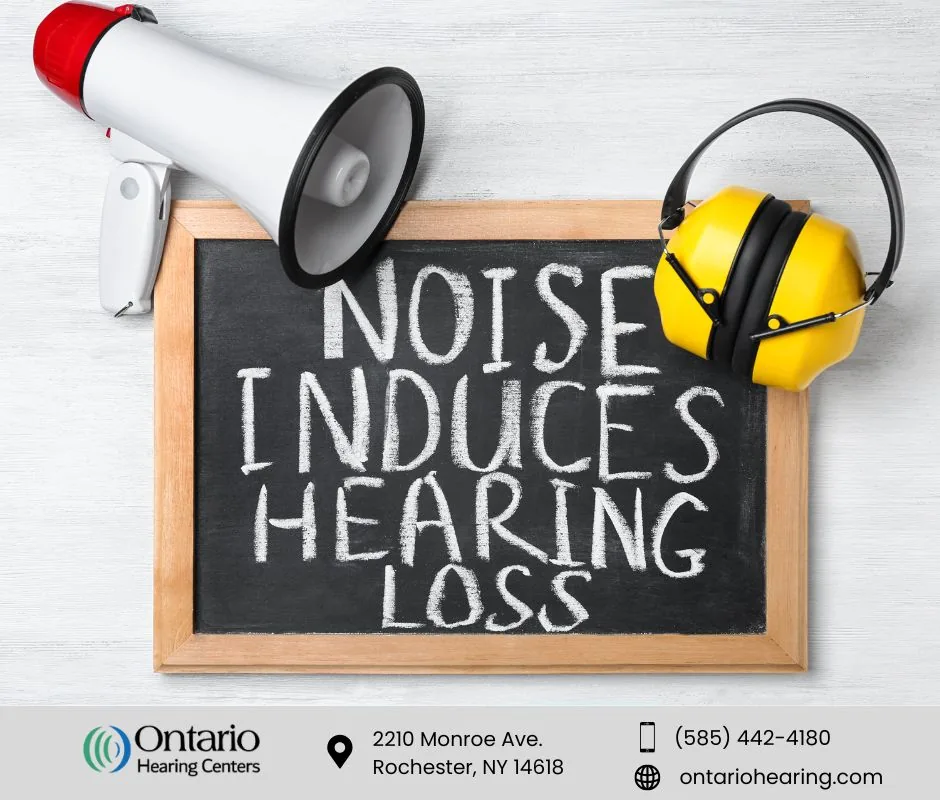
One of the most common causes of hearing loss is loud noise. This can happen if you’re exposed to loud music, power tools, or even everyday noises like traffic or sirens. Noise-related hearing loss happens when loud sounds damage the tiny hair cells in your inner ear. These cells don’t grow back, so the damage is permanent.
Tip: Wear ear protection, like earplugs or noise-canceling headphones, in noisy environments.
Aging
As we get older, our hearing naturally declines. This type of hearing loss is called presbycusis and is often caused by wear and tear on the inner ear. Aging-related hearing loss usually happens gradually, which means many people don’t notice it until it’s advanced.
Tip: Regular hearing tests can catch early signs of hearing loss, even if you don’t notice changes.
Family History
Hearing loss can run in families. If your parents or grandparents experienced hearing problems, you might be at a higher risk. Genetic factors can make you more likely to develop certain types of hearing loss, even at a young age.
Tip: If you have a family history of hearing loss, mention it during your next audiology visit.
Infections and Illnesses
Certain illnesses, like ear infections, meningitis, or measles, can lead to hearing loss. These conditions may damage the structures of the ear or the auditory nerve. Chronic illnesses like diabetes or heart disease can also increase the risk of hearing loss because they affect blood flow to the inner ear.
Tip: Treat ear infections promptly and maintain overall good health to reduce risks.
Medications
Some medications, known as ototoxic drugs, can harm your hearing. These include certain antibiotics, chemotherapy drugs, and even over-the-counter pain relievers when used in high doses.
Tip: If you’re starting a new medication, ask your doctor or audiologist about possible side effects on your hearing.
Head or Ear Injuries
Trauma to the head or ear can damage structures like the eardrum, bones, or inner ear. Sports injuries, car accidents, or even inserting objects into the ear can cause harm.
Tip: Use helmets during sports and avoid putting anything into your ear canal, including cotton swabs.
Loud Work Environments
If you work in construction, manufacturing, or another noisy industry, you may be at higher risk of hearing loss and tinnitus. Prolonged exposure to workplace noise can damage your hearing over time.
Tip: Follow workplace safety rules and wear proper hearing protection on the job.
Why Seeing an Audiologist Matters
Hearing loss often happens gradually, so you may not notice it right away. That’s why regular hearing tests are so important. Audiologists can identify early signs of hearing loss and recommend treatments or strategies to protect your hearing.
If you already have hearing loss, an audiologist can help you find the right solution, like hearing aids or assistive devices. We can also guide you on how to protect the hearing you still have.
How to Protect Your Hearing
- Limit Noise Exposure: Keep the volume low on headphones and avoid loud environments when possible.
- Use Ear Protection: Wear earplugs or earmuffs in noisy places.
- Stay Healthy: Manage chronic conditions like diabetes and avoid smoking, which can increase hearing loss risks.
- Get Regular Hearing Tests: Early detection can make a big difference. Ontario Hearing Center provides hearing tests in Rochester, NY.
Audiologists in Rochester, NY
Hearing loss can affect anyone, but understanding the risk factors can help you take steps to protect your ears. If you’re concerned about your hearing or want to prevent future issues, schedule an appointment with an audiologist.
Ontario Hearing Center connects you to the best audiologists in Rochester, NY.
Contact us today to schedule an appointment!