
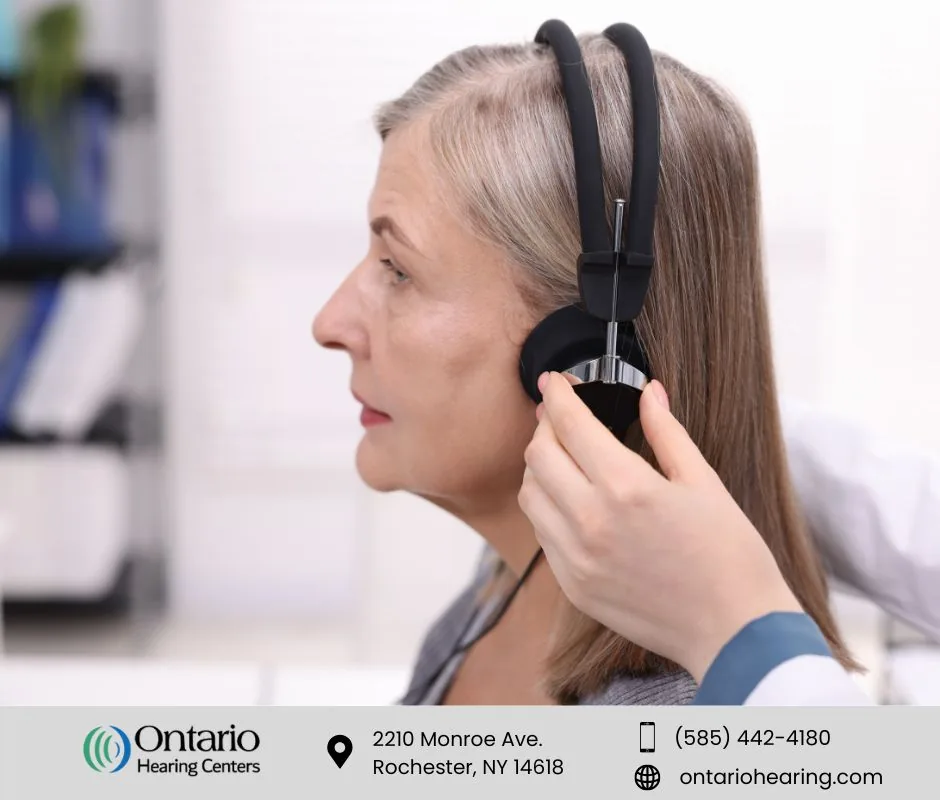
Hearing tests help with early detection of auditory changes, even before you notice symptoms, and are important for prevention and long-term ear health.
A full hearing evaluation includes screening, sound and speech testing, an audiogram, and a clear diagnosis from a hearing specialist.
Ontario Hearing Center provides comprehensive hearing tests in Rochester, NY.
Hearing is one of the most important parts of your daily life. It helps you enjoy conversations, hear warnings, stay balanced, and feel connected to the world around you. That is why many audiology experts talk about the importance of hearing tests, especially as people get older or spend years around loud noise. Regular hearing tests are just as essential as vision exams, dental visits, or routine physicals.
At Ontario Hearing Center, our goal is to make hearing care simple and stress-free. We provide complete hearing tests, professional screening, and full auditory evaluation services in Rochester, NY. Understanding why hearing tests matter can help you protect your ears, your communication, and your long-term well-being.
Why Hearing Tests Are Important
Here’s why hearing tests matter:
1. Early Detection
Many people experience hearing impairment for years before getting tested. A regular assessment helps catch problems early, when treatment is easier and results are better.
2. Better Communication
Untreated hearing loss can lead to misunderstandings, frustration, and social withdrawal. A hearing evaluation gives you a clear picture of where your hearing stands so you can stay connected and confident.
3. Protecting Your Brain and Balance
Your ears are linked to your brain and balance system. Studies show that untreated hearing loss can increase the risk of memory problems and balance concerns. Hearing tests play a key role in prevention.
4. Understanding Noise Sensitivity
Noise, age, and health changes affect how well your ears respond to different sound levels and frequencies. A hearing test shows how sensitive your ears are and whether protection or treatment is needed.
Regular hearing screening is one of the simplest ways to stay ahead of changes that affect your health, safety, and quality of life.
Signs You May Need a Hearing Test
Almost anyone can benefit from a hearing evaluation, but certain signs suggest it is time to schedule one soon:
Difficulty following conversations, especially with background noise
Asking people to repeat themselves
A feeling that others are “mumbling”
Turning up the TV louder than others prefer
Ringing or buzzing (tinnitus) inside one or both ears
Trouble hearing soft or high-frequency sounds
Feeling tired after conversations because listening requires extra work
Even mild hearing changes can affect communication and daily comfort. A simple audiology appointment can bring clarity.
Ontario Hearing Center provides hearing evaluations in Rochester, NY.
What Happens During a Hearing Test?
Many people feel unsure or nervous before their first hearing test, but the process is easy, gentle, and completely painless. At Ontario Hearing Center, we explain each step so you always know what to expect.
A typical hearing test includes:
1. Ear Examination
Your audiologist looks inside your ears to check for:
Wax buildup
Irritation
Fluid
Infection
Blockages
This step helps determine whether hearing changes relate to ear canal issues or deeper auditory problems.
2. Hearing Screening and Tone Testing
You will sit in a quiet room wearing headphones. The specialist will play beeps at different volumes and frequencies. You tap or raise your hand when you hear a sound.
This measures:
Your hearing threshold (softest sounds you can detect)
How each ear responds across different frequency levels
3. Speech Testing
You will listen to spoken words in quiet and noisy settings. This checks how well your brain and ears work together to understand speech.
4. Your Audiogram
The results are shown on a chart called an audiogram, which displays:
Sound thresholds
Sensitivity across frequencies
Hearing strength in each ear
5. Diagnosis and Treatment Plan
Your audiologist will explain:
What type of hearing loss (if any) is present
How mild, moderate, or severe it is
Whether balance or auditory processing issues are involved
What treatment options may help
This full evaluation gives you a clear picture of your hearing health.
How Often Should You Get a Hearing Test?
Your age, health, and lifestyle help determine how often you should schedule hearing assessments:
Adults 50+: Every 1–2 years
Adults under 50: Every 3 years
People exposed to loud noise: Yearly
People with known hearing loss: Every 6–12 months
Children/teens: Regular tests to support learning and speech
Because hearing loss is easier to prevent than to treat, regular testing is an important part of lifelong wellness.
The Role of an Audiologist
While online hearing screenings can provide quick checks, they cannot replace a full audiology evaluation.
Only an audiologist can:
Perform detailed diagnostic testing
Interpret your audiogram
Identify small changes in frequency and threshold
Diagnose underlying causes
Provide safe medical-grade care
Create a personalized treatment plan
A hearing specialist also checks for conditions linked to hearing loss, such as balance problems, auditory processing concerns, noise-induced damage, or chronic sinus or ear issues.
Professional care ensures accuracy, safety, and lasting results.
Why Hearing Tests Support Prevention
The importance of hearing tests goes beyond detecting problems. tHearing tests help prevent them.
A test can reveal:
Early noise-related impairment
Age-related auditory decline
Changes caused by medications
Earwax blockage
Fluid or inflammation
Balance-related hearing issues
With this knowledge, you and your specialist can take steps toward protection, treatment, and prevention.
Treatment Options if Hearing Loss Is Found
If your hearing test shows changes, your audiologist will guide you through the next steps. Treatment may include:
Hearing aids
Earwax removal
Tinnitus management
Counseling and communication training
Balance evaluation
Medical referrals when needed
Noise protection strategies
Every plan is customized based on your lifestyle, communication needs, and hearing goals.
Why Early Detection Matters
Early detection helps prevent:
Miscommunication
Social isolation
Work and school challenges
Fatigue from straining to hear
Faster progression of hearing loss
Increased balance problems
Cognitive stress
A hearing test is small, but the impact is big. It supports emotional, physical, and social well-being.
Schedule a Hearing Test in Rochester, NY
Understanding the importance of hearing tests is the first step toward better hearing and a healthier life. A hearing evaluation is quick, comfortable, and gives you valuable information about your auditory health.
At Ontario Hearing Center, our audiologists provide caring, expert support to help you understand your results and choose the best next steps. Whether you need a screening, diagnosis, or full treatment plan, we are here to guide you.
Your ears play a huge role in communication, balance, and everyday sound awareness. Do not wait until hearing impairment affects your life.
Call Ontario Hearing Center today to schedule your hearing test in Rochester, NY and take the first step toward clearer, healthier hearing.