
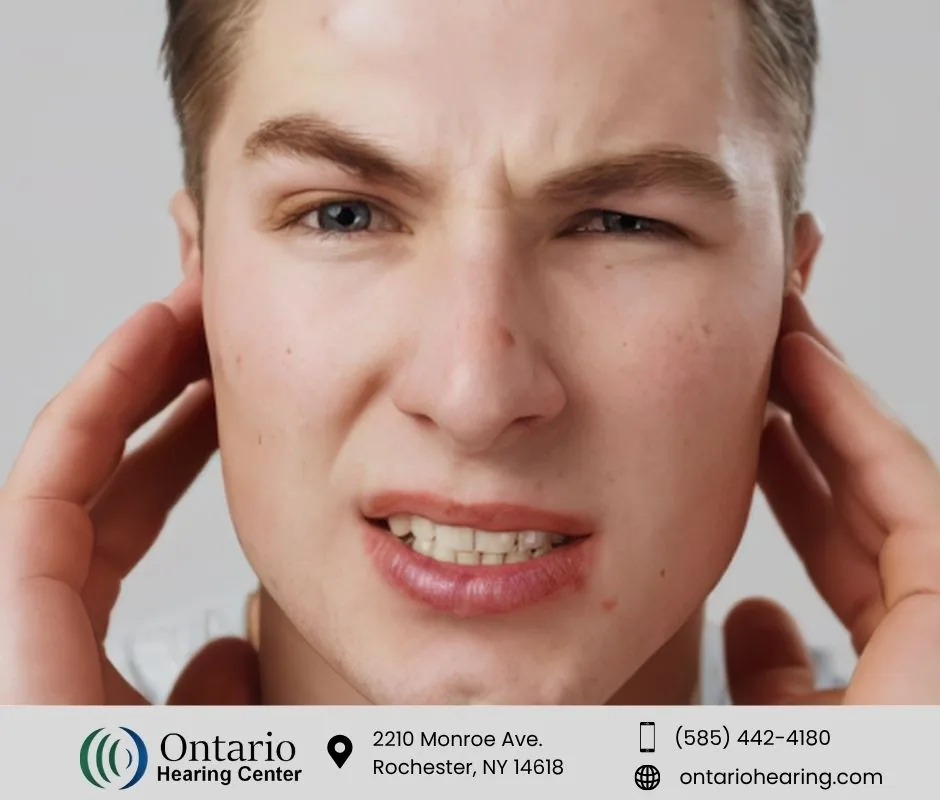
- Fluid in the ear may describe water in the ear canal or fluid trapped behind the eardrum in the middle ear.
- An ear exam and hearing evaluation can help distinguish fluid from earwax, infection, pressure problems, or sudden inner ear hearing loss.
- Ontario Hearing Center provides hearing evaluations for people with ear fullness, muffled hearing, and related concerns in Rochester, NY.
Fluid in ear can describe more than one problem. Sometimes water is trapped in the outer ear canal after swimming or bathing. In other cases, fluid collects behind the eardrum in the middle ear, where it cannot simply be wiped or shaken out.
These problems may feel similar, but they can have different causes and require different care. If your ear feels blocked, your hearing has changed, or the sensation does not improve, an evaluation can help identify what is happening.
What Does Fluid in the Ear Mean?
Your ear has three main sections: the outer ear, middle ear, and inner ear. Fluid can affect each area differently.
Water in the outer ear canal often follows swimming, showering, or heavy sweating. It may cause a sloshing feeling, temporary muffled hearing, or irritation. Water that remains trapped can contribute to swimmer's ear, an infection of the ear canal.
Middle ear fluid collects in the air-filled space behind the eardrum. It is also called a middle ear effusion or otitis media with effusion. This fluid may be present without an active infection. It often develops when the Eustachian tube, which helps ventilate and drain the middle ear, is swollen or blocked.
An inner ear disorder can also cause fullness, dizziness, or hearing changes, but fluid in the inner ear is not something a person can see or drain at home. Similar symptoms can come from several conditions, which is why an accurate evaluation matters.
Common Symptoms of Fluid Behind the Eardrum
Middle ear fluid does not always cause pain. Adults and children may notice:
- A plugged, full, or pressurized feeling
- Muffled or reduced hearing
- Popping, bubbling, or crackling sounds
- A feeling that sounds are echoing
- Mild discomfort or ear pain
- Balance problems or dizziness
- Trouble understanding speech, especially in background noise
Fever, increasing pain, or feeling unwell may suggest an infection. Fluid or discharge coming out of the ear is different from fluid trapped behind the eardrum and should be assessed, especially if it is bloody, clear, foul-smelling, or follows an injury.
What Causes Fluid in the Ear?
Colds and respiratory infections
A cold can inflame the nose, throat, and Eustachian tubes. If a tube does not open and close normally, pressure can change, and fluid may collect in the middle ear. The congestion may improve before the ear fullness or muffled hearing resolves.
Allergies and sinus congestion
Allergies can cause swelling around the Eustachian tube opening. Some people notice ear pressure, popping, or muffled hearing during allergy season. These symptoms do not prove that fluid is present, so an ear examination is still important when they persist.
Middle ear infections
An acute middle ear infection can produce fluid behind the eardrum. Fluid may also remain after the active infection has improved. An examination is needed to tell the difference between an infection and an effusion without infection.
Pressure changes
Flying, driving through mountains, or diving can create a pressure difference across the eardrum. When the Eustachian tube cannot equalize that pressure, the ear may feel blocked or painful. In some cases, the pressure problem is accompanied by fluid.
Water trapped in the ear canal
Water after swimming or bathing affects the outer ear rather than the space behind the eardrum. Persistent moisture, itching, tenderness, or pain when the outer ear is touched can point to the swimmer's ear and should be evaluated by a medical provider.
Can Fluid in the Ear Cause Hearing Loss?
Yes. Fluid behind the eardrum can interfere with the movement of the eardrum and middle ear bones. Sound may not travel efficiently to the inner ear, producing a temporary type of hearing loss called conductive hearing loss.
The degree of change can vary. Some people notice only a slight difference, while others struggle to follow a conversation or hear softer sounds. Persistent hearing changes can affect communication, school, work, and balance.
A blocked feeling is not always caused by fluid. Earwax, an eardrum problem, and sudden sensorineural hearing loss can feel similar. Sudden hearing loss in one or both ears should be treated as urgent, even if it feels like congestion or a plugged ear.
How Is Middle Ear Fluid Checked?
A hearing care professional begins by asking about your symptoms, when they started, and whether you have had a recent cold, allergy flare, infection, flight, swim, or injury. Testing may include:
- Otoscopy: A visual examination of the ear canal and eardrum
- Tympanometry: A measurement of how the eardrum moves as air pressure changes in the ear canal
- Hearing testing: A check of how softly you hear different pitches and how clearly you understand speech
These findings can help separate middle ear fluid from earwax, an outer ear problem, or inner ear hearing loss. An audiologist may recommend medical follow-up with a primary care provider or ear, nose, and throat physician when the results indicate a condition that needs medical treatment.
How Do You Get Rid of Fluid in the Ear?
The right approach depends on where the fluid is and what caused it. Middle ear fluid often improves as the Eustachian tube begins working normally again, but persistent or recurrent symptoms need professional guidance. Infection, allergy-related swelling, structural problems, and other causes do not all receive the same treatment.
Avoid inserting cotton swabs, hairpins, or other objects into the ear. Do not use ear candles. Ear drops placed in the canal cannot reach fluid behind an intact eardrum, and drops or irrigation may be unsafe when there is an infection, a perforated eardrum, ear drainage, or a history of ear surgery.
Swallowing, yawning, or chewing gum may help with mild pressure changes during air travel. Do not forcefully try to pop an ear that is painful, draining, or affected by a recent injury. If you are unsure whether the problem is water, wax, pressure, or middle ear fluid, have the ear checked before trying a home remedy.
When Should You Seek Care?
Schedule an evaluation when ear fullness, muffled hearing, or popping lasts, returns often, or interferes with communication. Seek prompt medical care for:
- A sudden decrease in hearing, especially in one ear
- Severe or worsening ear pain
- Fever or signs of infection
- Fluid, pus, or blood draining from the ear
- Significant dizziness, imbalance, or vomiting
- Symptoms after a head or ear injury
- New one-sided symptoms that do not resolve
Children may not be able to describe muffled hearing. Changes such as turning up the television, not responding consistently, speech concerns, or difficulty at school can be reasons to arrange a hearing evaluation.
Start With a Clear Hearing Evaluation
Because fluid in the ear can resemble several other ear and hearing problems, the safest next step is to find out what is causing the symptoms. Ontario Hearing Center's audiologists can evaluate your hearing and explain whether the results suggest a middle ear issue, another type of hearing change, or the need for medical referral.
If your ear feels full or your hearing has changed, schedule a hearing test at Ontario Hearing Center in Rochester, NY.